Why “Just Checking In” Emails Don’t Work Anymore (And How to Follow Up Without Being Ignored)
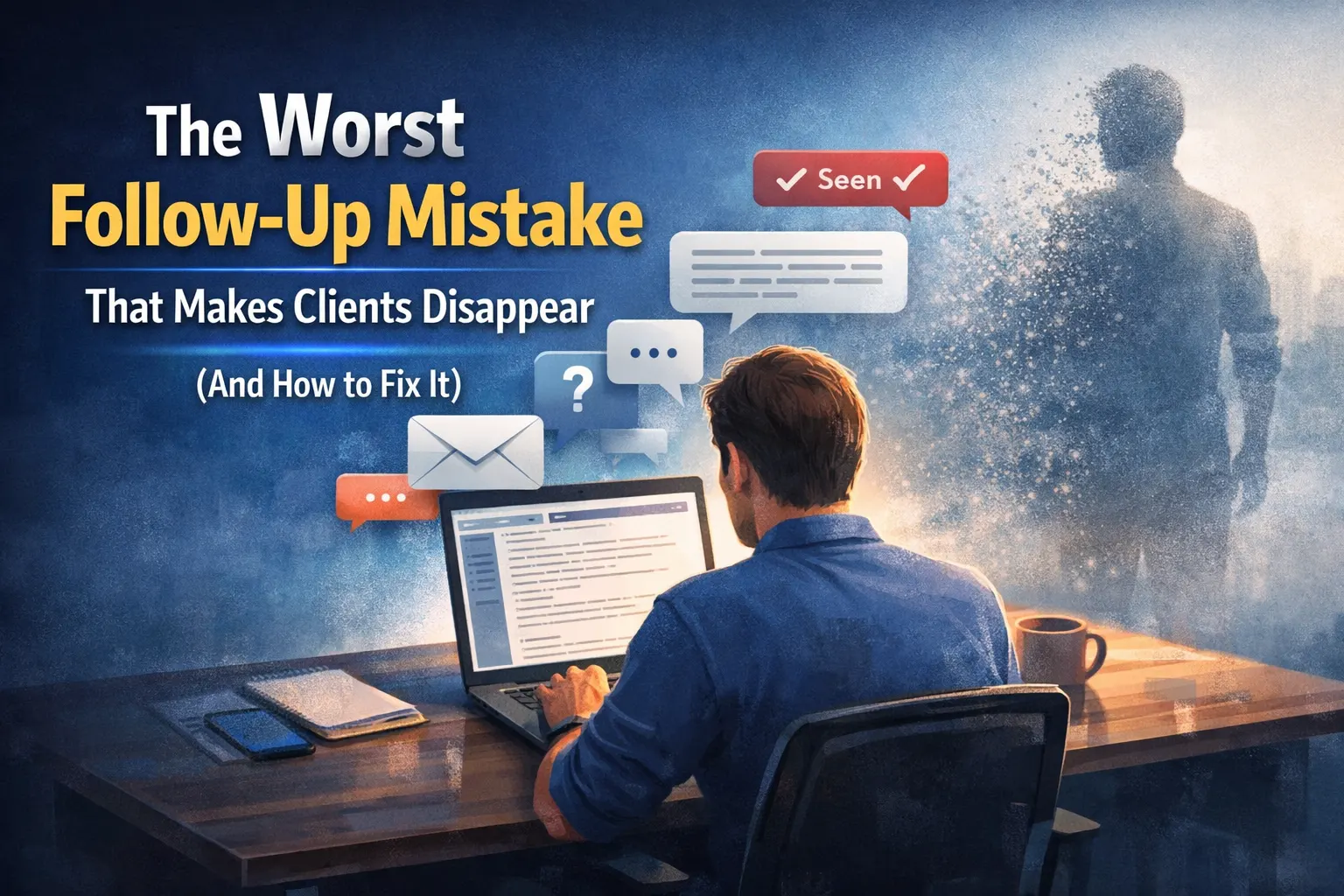
If you’ve ever sent a follow-up email that started with “Just checking in…” and then heard nothing back, you’re not alone. For freelancers, consultants, and B2B service providers, this pattern is frustratingly common. This article explains why “just checking in” emails don’t work anymore, and how generic follow-up language fails to trigger any psychological reason for a prospect to respond—especially after a call or proposal.
More importantly, we’ll look at what actually works instead.
The Real Problem Behind Client Ghosting
When a prospect goes silent after a call or proposal, it’s tempting to assume:
- they weren’t serious
- they didn’t like the offer
- they chose someone else
Sometimes that’s true. But in many cases, the silence has very little to do with interest and everything to do with how the follow-up is framed.
Most prospects don’t consciously decide to ignore you. They simply delay responding because your message doesn’t clearly tell them what to do next.
Why Generic Language Fails Psychologically
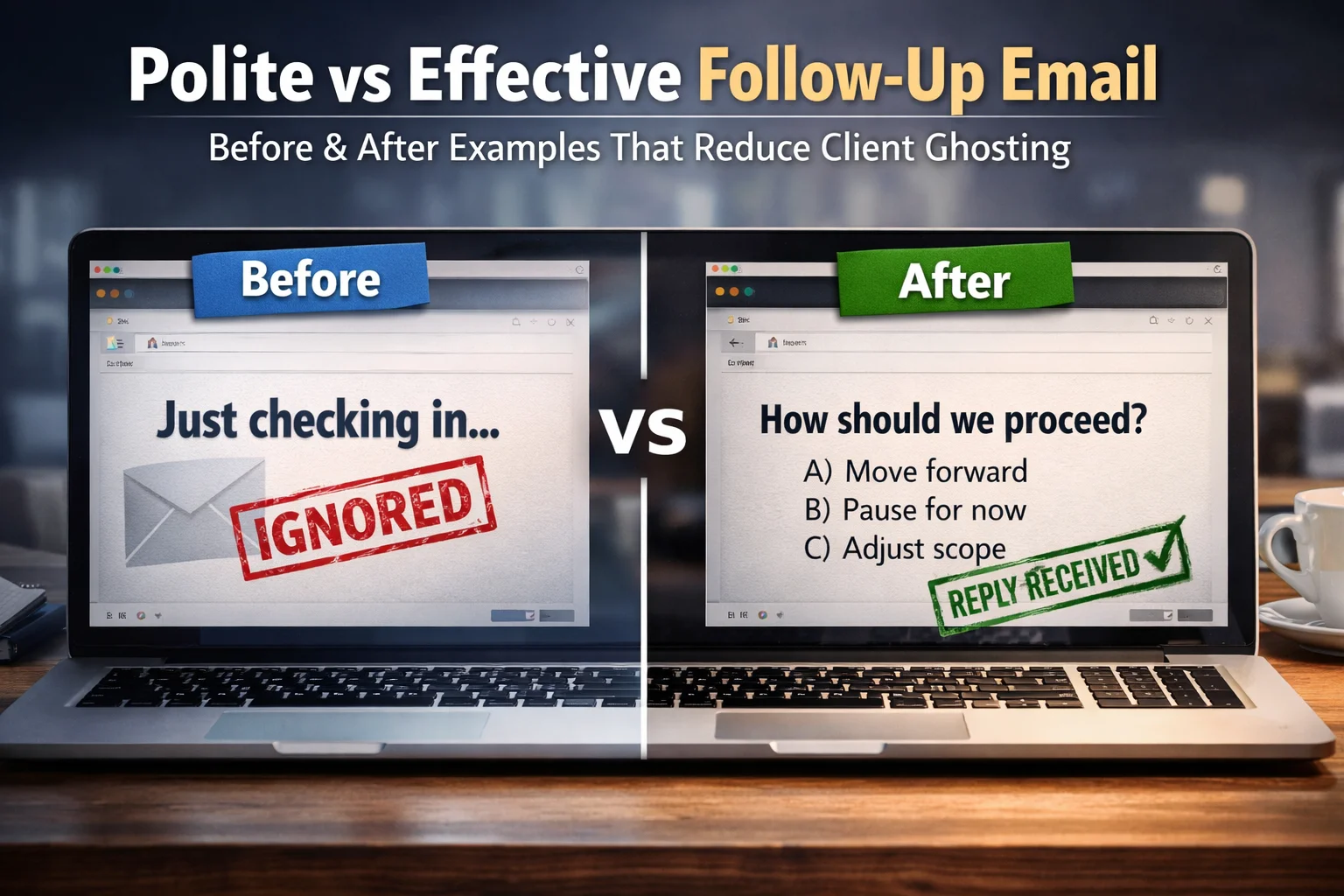
“Just checking in” feels polite, but psychologically, it creates friction.
1. It Creates No Trigger to Act
A psychological trigger gives the reader a reason to respond now. Generic language does the opposite. It:
- introduces no new information
- asks no clear question
- frames no decision
Without a trigger, the brain postpones action.
2. It Increases Cognitive Load
After a proposal, prospects are often managing multiple priorities. A vague follow-up forces them to:
- recall the context of your conversation
- remember what was proposed
- decide how to respond
When the effort feels higher than the reward, the email gets ignored.
3. It Avoids the Decision Entirely
Effective follow-ups help prospects make a decision—yes, no, or later.
“Just checking in” avoids that moment. When no decision is framed, delay becomes the default outcome. That delay looks like ghosting on your end.
Why This Happens More Often Today
Client ghosting feels more common now because:
- inboxes are more crowded
- attention spans are shorter
- remote communication removes social pressure
As a result, language precision matters more than ever. Follow-ups must be designed to guide action, not simply signal availability.
What Effective Follow-Ups Do Differently
Strong follow-ups share a few characteristics:
- they restate the original goal or problem
- they clarify the next step
- they reduce the effort required to reply
- they respect the prospect’s time
Instead of chasing, they create clarity.
This is less about persuasion and more about decision facilitation—a core principle in modern, human-centered marketing.
Why Systems Beat Improvised Follow-Ups
Most freelancers and consultants write follow-ups in the moment. Over time, this leads to:
- inconsistent messaging
- emotional language
- defaulting to “just checking in”
A simple system solves this by standardizing how and when you follow up.
This is the thinking behind the AI Client Follow-Up Prompt & Email System. Rather than guessing what to say after each call or proposal, the system provides:
- AI-guided prompts for follow-ups
- decision-focused email structures
- reusable templates designed to reduce ghosting
The goal isn’t to pressure prospects—it’s to make responding easy and clear.
Why This Approach Converts Without Feeling Pushy
Follow-ups that work well don’t rely on urgency or persuasion. They work because they:
- remove ambiguity
- reduce mental effort
- guide the prospect toward a clear next step
When follow-ups are structured this way, prospects are more likely to respond—whether the answer is yes or no.
And even a clear “no” is better than silence.
Final Thought
If prospects consistently ghost you after calls or proposals, the issue is rarely effort or professionalism. More often, it’s generic language without a psychological trigger.
“Just checking in” belongs to an older style of communication.
Today, clarity beats persistence—and systems beat improvisation.
If you want a practical way to replace vague follow-ups with a clear, reusable process, the AI Client Follow-Up Prompt & Email System is designed to help you do exactly that.
If following up feels awkward or inconsistent, it may be worth using a structured prompt and email system instead of writing from scratch each time.
AI Client Follow-Up & Deal Closing Prompt System