When Is the Right Time to Follow Up? A Simple Timing Framework for Freelancers and Consultants
When is the right time to follow up?
If you’re a freelancer, consultant, or B2B service provider, this question probably comes up every time a prospect goes quiet after a call or proposal.
You sent the proposal.
They said they’d “review it.”
Then… nothing.
Follow up too soon, and you risk sounding pushy.
Wait too long, and the deal quietly dies.
Client ghosting isn’t just frustrating — it creates uncertainty, wasted time, and stalled cash flow. The good news is that most ghosting isn’t personal. It’s usually a timing problem, not a rejection.
This article breaks down a simple, practical timing framework you can use to follow up professionally and consistently — without chasing, guessing, or feeling awkward.
Why Prospects Ghost After a Call or Proposal
Before fixing timing, it helps to understand why prospects go silent in the first place.
In most cases, ghosting happens because of:
- Competing priorities
- Internal delays or approvals
- Unclear next steps
- Inbox overload
Very rarely is it because you “messed up” the call or proposal. When follow-ups fail, it’s usually because they arrive at the wrong moment or don’t clearly signal what should happen next.
That’s why having a timing framework matters.
The Follow-Up Timing Framework
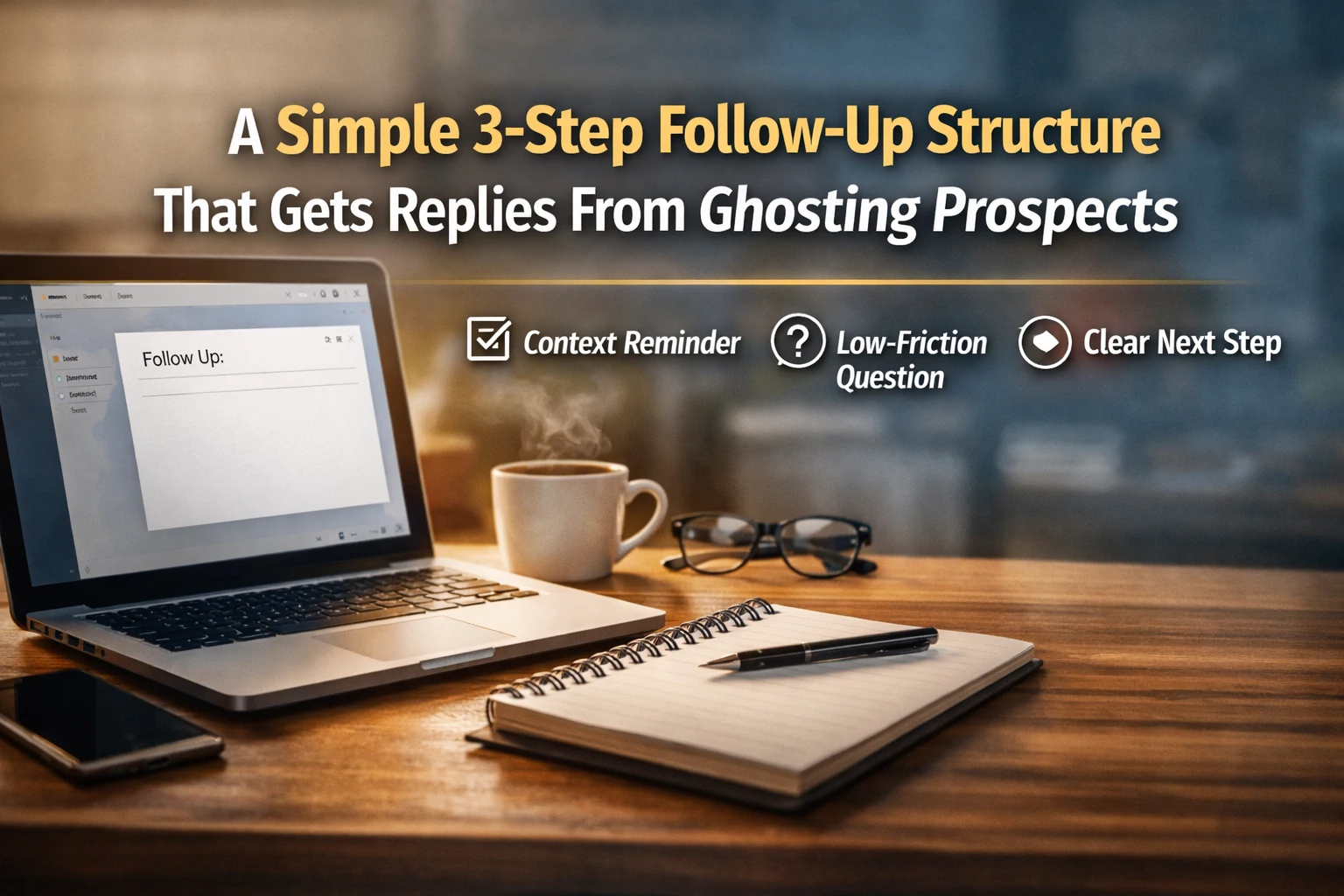
Instead of sending random check-ins, use a structured sequence. Each follow-up has a specific role, and the timing determines how it’s received.
Follow-Up #1 — 48 Hours After the Call or Proposal
Purpose: Context reminder
Tone: Polite, neutral, low pressure
This first follow-up exists to resurface the conversation while it’s still fresh. At this point, you are not asking for a decision.
You’re simply reminding them:
- What you discussed
- What you sent
- Why you’re reaching out
This works because many prospects genuinely intend to reply but forget. A 48-hour follow-up feels normal, professional, and expected.
Follow-Up #2 — 5–7 Days Later
Purpose: Decision nudge
Tone: Clear, respectful, forward-moving
If there’s still no response after a few days, the issue is often uncertainty. This follow-up should gently prompt a decision or update.
The key here is clarity.
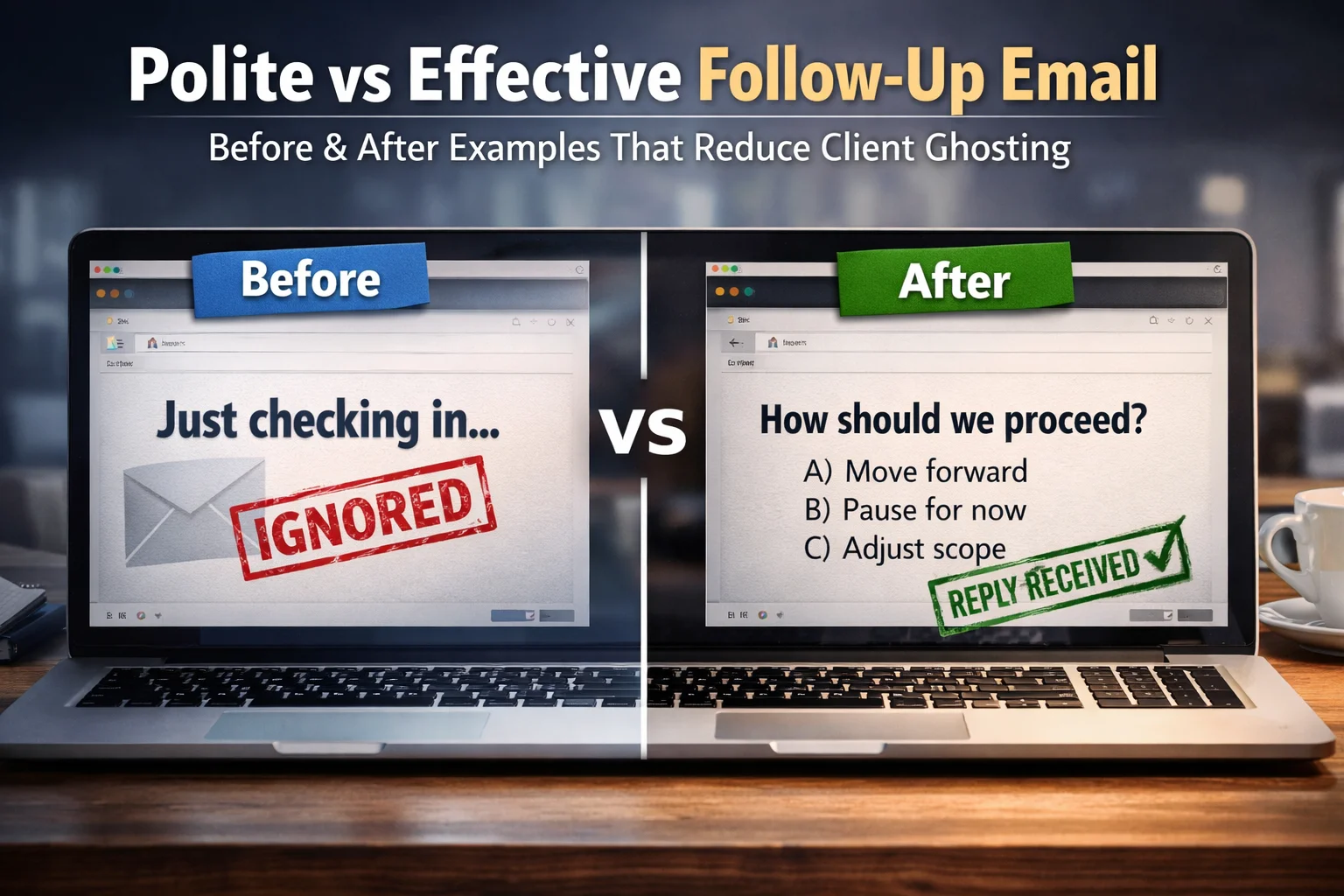
Instead of asking, “Did you get a chance to look?”, you’re helping them move forward by outlining the next step.
At this stage, timing is critical. Too early and it feels rushed. Too late and urgency disappears.
Follow-Up #3 — 10–14 Days Later
Purpose: Close the loop
Tone: Professional, calm, boundary-setting
This is the follow-up most people skip — and it’s the most important.
A close-the-loop message does two things:
- It gives the prospect an easy way to respond
- It releases you from waiting indefinitely
You’re not chasing.
You’re setting a professional boundary.
Ironically, this message often gets replies because it removes pressure and signals that you respect your own time.
Why Timing Matters More Than Wording
Many freelancers obsess over writing the “perfect” follow-up email. In reality, even a well-written message will fail if it’s sent at the wrong time.
Timing creates:
- Psychological safety
- Clear expectations
- Momentum in the decision process
When prospects know what happens next, silence becomes less likely.
Turning the Framework Into a Repeatable System
Knowing the timing framework is one thing. Applying it consistently — especially when you’re busy — is another.
This is where having a simple system helps.
Instead of rewriting emails or second-guessing yourself every time a prospect goes quiet, you can rely on pre-written follow-ups that match each stage of the timeline.
I compiled this timing framework, along with ready-to-use follow-up prompts and emails, into a small resource called the AI Client Follow-Up Prompt & Email System. It’s designed to help service providers follow up clearly and professionally without overthinking every message.
If client ghosting after calls or proposals is slowing you down, having a structured follow-up system can remove a lot of friction.
Final Thought
Ghosting feels personal, but it’s usually procedural.
When your follow-ups are sent at the right time — with the right intent — you reduce uncertainty, protect your time, and create clearer outcomes.
Sometimes that outcome is a “yes.”
Sometimes it’s a clean “no.”
Both are better than silence.
If you want a ready-made version of this timing framework with exact follow-up wording for each stage, you can find it here:
AI Client Follow-Up Prompt & Email System