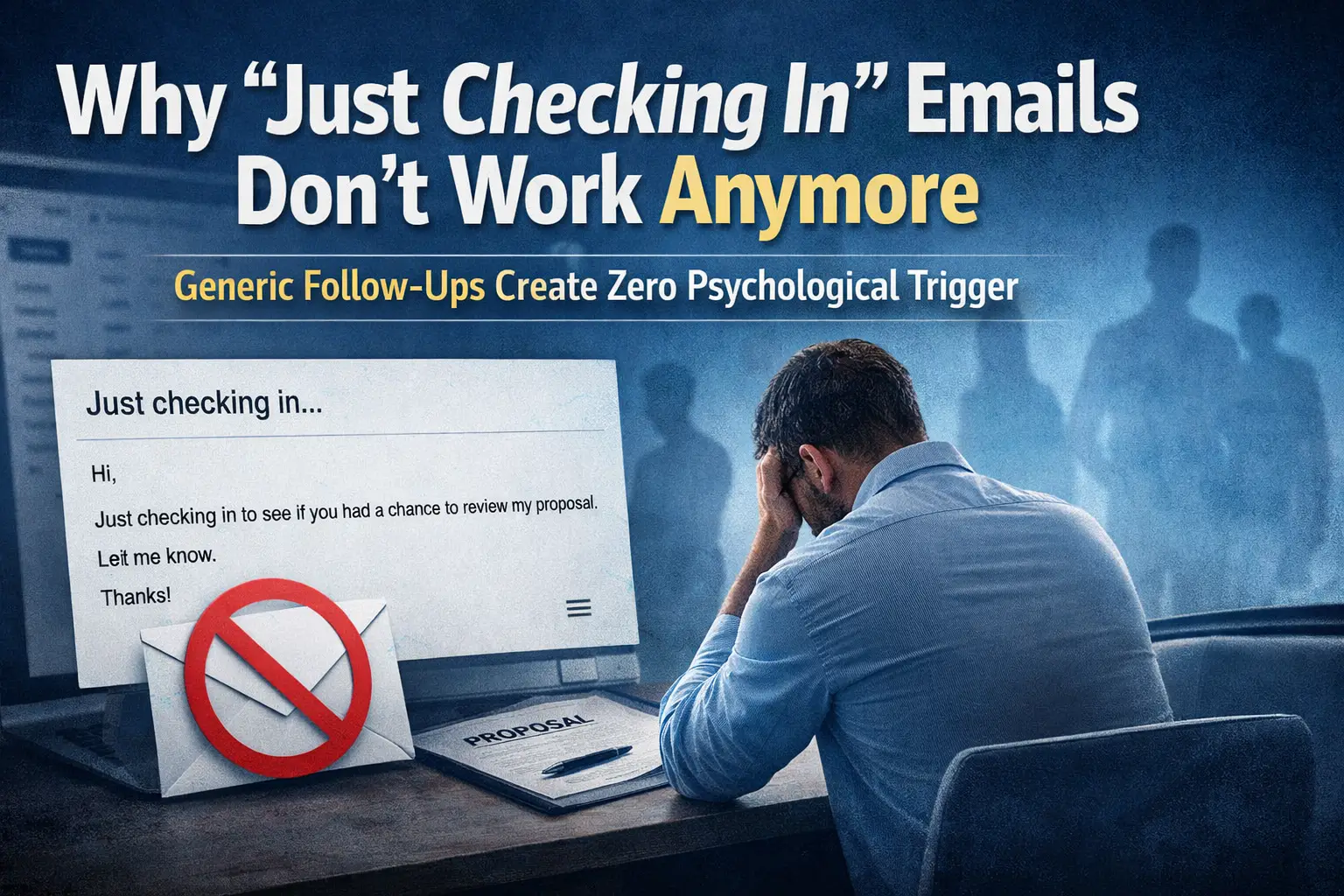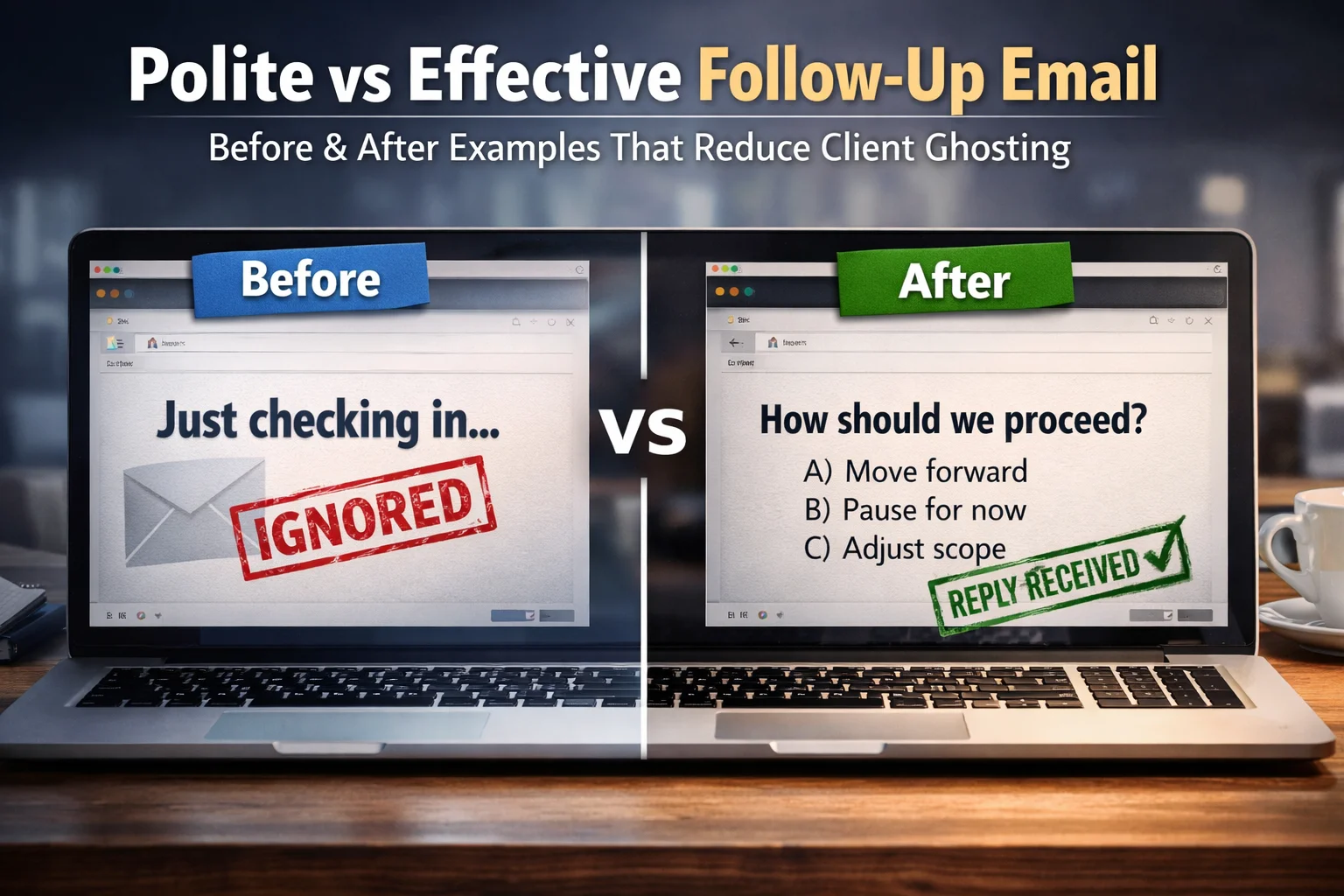
The Worst Follow-Up Mistake That Makes Clients Disappear is not about being ignored—it’s about unintentionally pushing potential clients away without realizing it. For freelancers, consultants, agency owners, and solopreneurs, follow-up is one of the most important (and most misunderstood) parts of the sales process. When a prospect goes silent, the natural reaction is to send another message. Unfortunately, how that message is written often determines whether the client comes back—or disappears for good.
This article breaks down the most damaging follow-up mistake, why it happens, and how to fix it using a more intentional, client-centered approach.
The Real Reason Clients Go Quiet
Most professionals assume ghosting means rejection. In reality, silence usually means one of three things:
• The client got busy
• The client hasn’t decided yet
• The client feels overwhelmed by the conversation
The problem isn’t the follow-up itself—it’s the way it’s delivered.
The Worst Follow-Up Mistake: Saying Too Much, Too Soon
Long Follow-Ups Create Pressure
The most common mistake is sending long, detailed follow-ups packed with explanations, reassurance, and multiple questions.
These messages often include:
- Repeating the entire proposal
- Over-justifying pricing
- Asking several questions at once
- Trying to “remove objections” preemptively
While well-intentioned, this approach increases cognitive load. Instead of making it easier for the client to respond, it makes the decision heavier.
In Marketing 6.0 terms, this breaks the human-centric experience. People don’t want to be convinced—they want to feel safe making a decision.
Why This Mistake Kills Responses
Decision Fatigue Is Real
Every extra sentence adds friction. When a client opens a long follow-up, they subconsciously think:
“I’ll deal with this later.”
Later turns into never.
Short, intentional follow-ups reduce mental effort and respect the client’s attention. That’s why brevity converts better than persistence.
The Better Follow-Up Strategy (That Doesn’t Feel Salesy)
Reopen the Loop, Don’t Push the Decision
Effective follow-up does three things:
- It reminds without pressure
- It requires minimal effort to respond
- It gives the client control
Instead of chasing, the message simply reopens the conversation.
This approach aligns with Marketing 6.0’s focus on trust, relevance, and emotional ease. You’re not forcing action—you’re facilitating clarity.
Why Most People Struggle to Write Good Follow-Ups
Knowing what not to do is easier than knowing what to say.
Many professionals:
- Overthink wording
- Rewrite messages repeatedly
- Switch tones mid-conversation
- Send follow-ups too fast or too late
Consistency is the missing piece. Without a system, follow-up becomes emotional instead of strategic.
A Systemized Way to Prevent Client Ghosting
This is where a structured follow-up framework helps.
A Client Follow-Up Prompt & Email System (Anti-Ghosting) removes guesswork by providing:
- Situation-based follow-up prompts
- Clear timing guidance
- Short, client-respectful messaging
- Language that reduces pressure instead of increasing it
The goal isn’t to “close harder.”
It’s to communicate cleaner.
When follow-ups are intentional, clients respond more often—without feeling chased.
Final Thoughts
Client ghosting isn’t random. In most cases, it’s the result of overwhelm created unintentionally through follow-up communication.
Fixing the way you follow up—not the frequency—can change outcomes dramatically over time.
If you want a calm, professional way to stay consistent without rewriting messages every time, having a ready-to-use follow-up system can make that process much easier.
Sometimes, fewer words are what bring clients back.
If follow-ups feel uncomfortable or inconsistent right now, a simple prompt-based system can help you handle them with more clarity and less effort.
AI Client Follow-Up & Deal Closing Prompt System