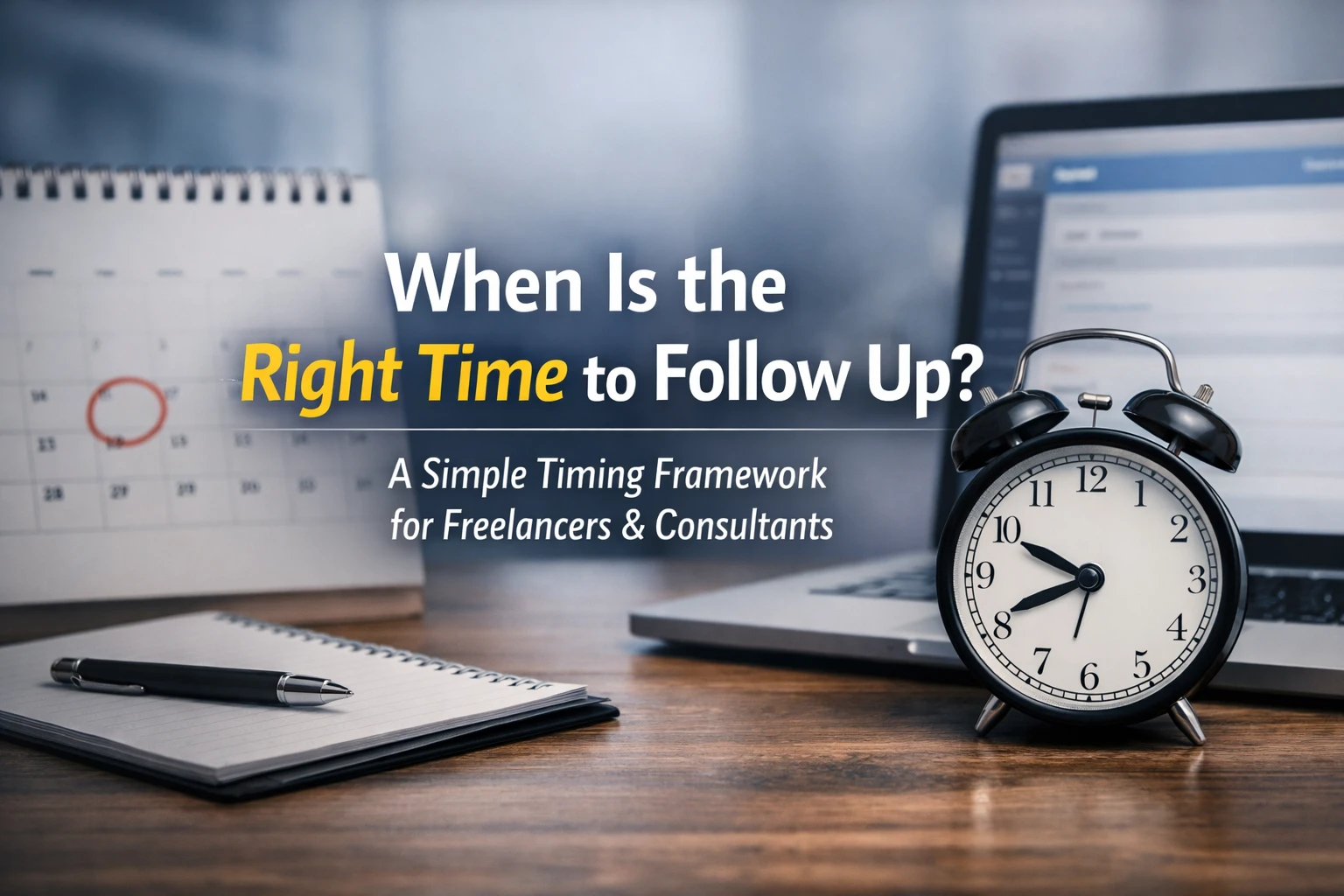
In this article, “Polite vs Effective Follow-Up Email: Before & After Examples That Reduce Client Ghosting,” we’ll look at a common mistake freelancers and consultants make after a call or proposal — and how a simple structural change can dramatically improve response rates.
If you provide B2B services, you’ve likely experienced this:
You have a productive call. The prospect seems interested. You send a proposal. Then… silence.
No reply. No decision. No closure.
This situation is often described as “client ghosting.” But in many cases, prospects aren’t intentionally ignoring you — they’re delaying a decision. And the way most follow-up emails are written actually makes it easier for them to keep delaying.
Let’s break down the difference between a polite follow-up and an effective one.
Why Prospects Stop Responding After a Proposal
After a call or proposal, your prospect is usually dealing with:
- Competing priorities
- Internal discussions
- Budget considerations
- Uncertainty about next steps
- Decision fatigue
When your follow-up email requires effort, thinking, or initiative from them, responding becomes optional — and often postponed.
Most “polite” follow-ups unintentionally create this exact problem.
The Polite Follow-Up (Common but Ineffective)
Example
Hi [Name],
Just checking in to see if you had any updates on the proposal.
Let me know what you think.
Best,
[Your Name]
Why This Gets Ignored
This message is polite, professional, and respectful — but it has one major weakness:
It requires the prospect to decide how to respond.
They must think about:
- Whether they reviewed the proposal
- What their position is
- What to say next
That’s cognitive effort. And when effort is required, delay is easy.
This type of email asks for attention, not action.
The Effective Follow-Up (Structured and Decision-Focused)
Example
Hi [Name],
Just checking how you’d like to proceed with the proposal.
Would you prefer to:
A) Move forward as discussed
B) Pause for now
C) Adjust scope or timeline
Let me know which option fits best.
Best,
[Your Name]
Why This Works Better
This email reduces friction by turning the response into a simple choice.
Instead of asking the prospect to generate an answer, you give them predefined options. The mental load is lower. Responding becomes easier than ignoring.
This structure also provides clarity. Even if they are not ready to proceed, they can quickly select an alternative — which keeps communication active instead of stalled.
Most importantly, it moves the conversation forward.
The Real Difference — Politeness vs Progress
Both emails are professional. Both are respectful.
The difference is direction.
A polite follow-up maintains contact.
An effective follow-up guides a decision.
When prospects disappear after a call or proposal, the issue is often not interest — it’s lack of structure in the follow-up process.
Building a Repeatable Follow-Up System
One effective email can help. But most service providers face multiple follow-up scenarios, such as:
- After sending a proposal
- After a discovery call
- After no response for several days
- After a “we’ll get back to you” message
- After partial agreement but no confirmation
Each situation benefits from a slightly different communication approach.
Instead of rewriting emails each time, many freelancers and consultants use structured follow-up frameworks designed for specific moments in the client decision process.
The AI Client Follow-Up Prompt & Email System is built around this idea — providing ready-to-send follow-up prompts and email structures designed specifically for situations where prospects stop responding after calls or proposals.
Small Structural Changes, Clearer Communication
Improving follow-up effectiveness is rarely about writing more persuasive language. It’s usually about making the next step obvious and easy.
When your follow-ups reduce decision friction, you create momentum. And momentum keeps conversations alive.
If you frequently find yourself wondering what to send after silence, having structured follow-up templates can simplify the process and remove uncertainty from client communication.
The full structured follow-up system is available if you want a ready-to-use framework for different ghosting scenarios.
AI Client Follow-Up & Deal Closing Prompt System