A Simple 3-Step Follow-Up Structure That Gets Replies From Ghosting Prospects
If you’re a freelancer, consultant, or B2B service provider, you’ve likely experienced this:
the call went well, the proposal was sent, and then… silence.
Ghosting prospects after a call or proposal is one of the most frustrating parts of selling services. Not because the deal is lost—but because you don’t know why the conversation stopped or how to follow up without sounding awkward, desperate, or pushy.
The good news is that most ghosting isn’t rejection. It’s indecision, distraction, or low urgency. And that means your follow-up doesn’t need more persuasion—it needs more structure.
Below is a simple 3-step follow-up structure that gets replies by reducing friction and restoring clarity.
Why Most Follow-Ups Fail
Before we get into the structure, it’s important to understand why common follow-ups don’t work.
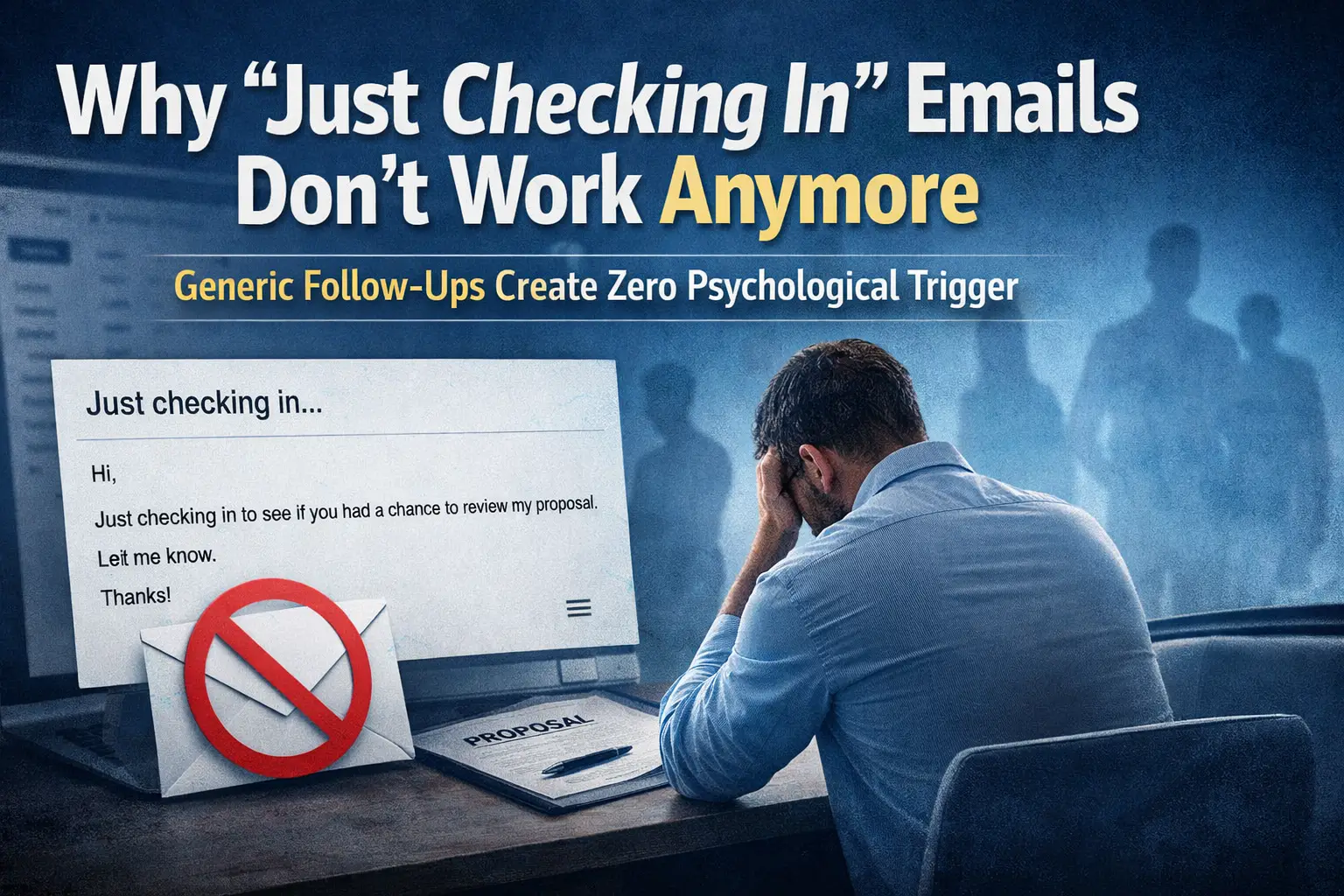
Most follow-up emails look like this:
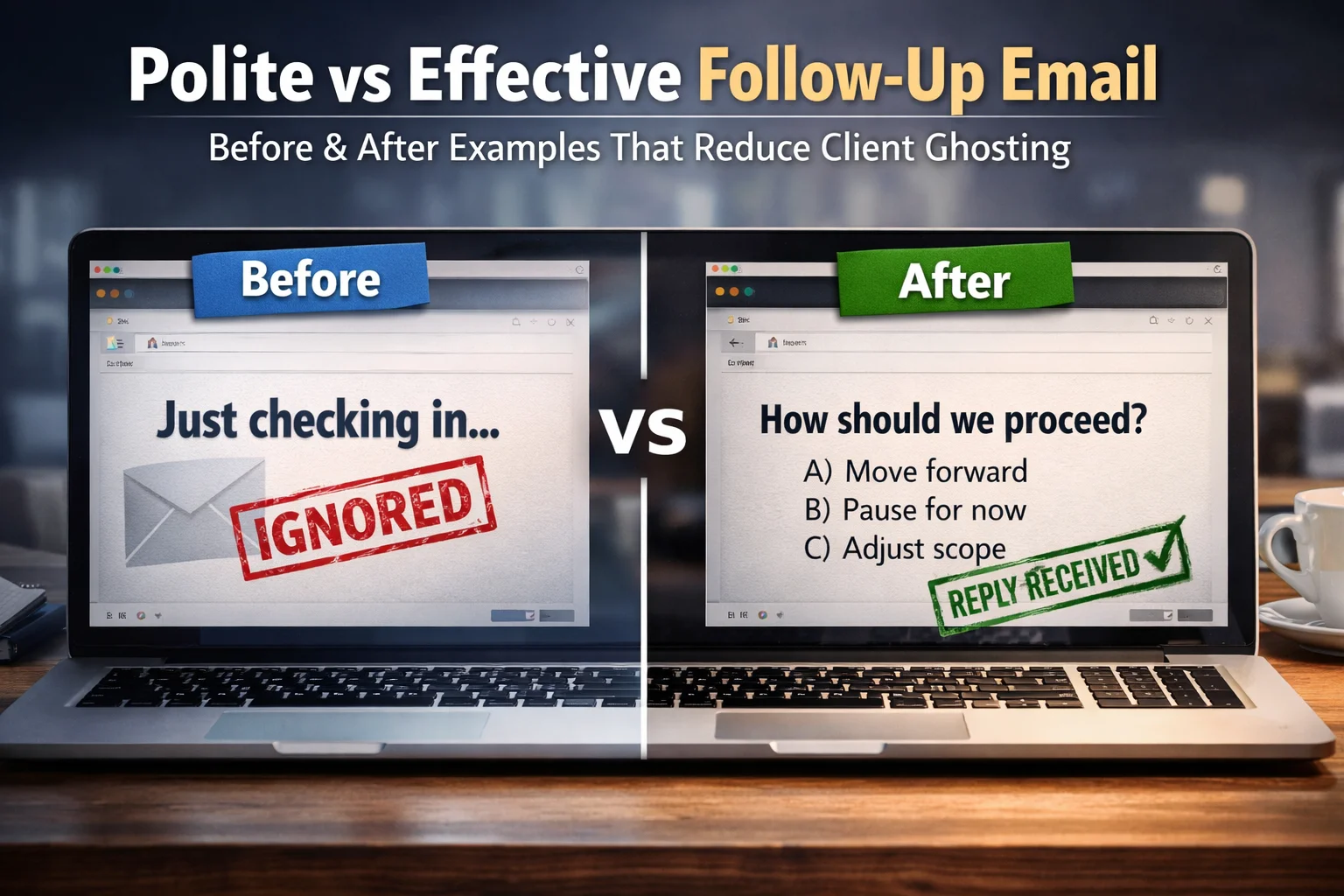
- “Just checking in…”
- “Any thoughts?”
- “Wanted to see if you had a chance to review…”
These messages fail because they:
- Reopen the decision
- Ask the prospect to think again
- Provide no clear next step
When a busy prospect sees an open-ended message, the easiest option is to ignore it.
Effective follow-ups do the opposite. They close loops instead of reopening them.
The 3-Step Follow-Up Structure That Gets Replies
Step 1: Context Reminder
Start by briefly reminding the prospect what this follow-up is about.
This is not a recap of the entire call or proposal. It’s a short orientation cue that helps them instantly understand why you’re emailing.
Example:
“Following up on the website redesign proposal we discussed last week.”
This removes confusion and reduces the mental effort required to respond.
Step 2: Low-Friction Question
Next, ask a question that is easy to answer.
Avoid open-ended questions like:
- “What do you think?”
- “Any feedback?”
- “How would you like to proceed?”
Instead, use a binary or low-friction question that limits the options.
Example:
“Are you still planning to move forward, or should I pause this for now?”
This works because it:
- Removes pressure
- Gives the prospect an exit
- Encourages a clear response
People respond faster when the decision feels simple.
Step 3: Clear Next Step
Finally, state what will happen next if you don’t hear back.
This isn’t a threat. It’s professional clarity.
Example:
“If I don’t hear back by Thursday, I’ll close this out for now.”
This does two things:
- Protects your time
- Signals confidence and professionalism
Clear next steps reduce ambiguity and often prompt a reply from prospects who were simply delaying.
Putting It All Together
Here’s how the full structure looks in one message:
“Following up on the proposal we discussed.
Are you still planning to move forward, or should I pause this for now?
If I don’t hear back by Friday, I’ll close this out.”
Short. Clear. Low pressure.
This structure works because it respects the prospect’s time while protecting yours.
Make This Easier With a Reusable System
Most freelancers struggle not because they don’t know what to say, but because they rewrite follow-up emails from scratch every time.
That’s why this structure works best when saved as a reusable system—one you can adapt quickly without overthinking tone or wording.
The AI Client Follow-Up Prompt & Email System was created for exactly this situation. It provides ready-to-use follow-up prompts and email structures designed to handle post-call and post-proposal ghosting professionally and calmly.
No chasing. No awkward language. Just clear follow-ups that make it easy for prospects to respond.
If client ghosting has been slowing down your cash flow, having a simple follow-up system in place can remove a lot of friction from your sales process.
If you want a plug-and-play version of this structure you can reuse for different clients and situations, you can explore the AI Client Follow-Up Prompt & Email System to see if it fits your workflow.
AI Client Follow-Up & Deal Closing Prompt System